8 Days Lemosho Route – The Ultimate Kilimanjaro Climbing Experience
Overview
The 8 Days Lemosho Route is widely regarded as the best way to climb Mount Kilimanjaro, combining spectacular scenery, excellent acclimatization, and one of the highest summit success rates of any route on Africa’s highest mountain. Beginning on Kilimanjaro’s remote western slopes, this carefully designed itinerary takes you through diverse ecological zones, from lush rainforest and the expansive Shira Plateau to the dramatic Barranco Wall, the alpine desert surrounding Barafu Camp, and finally the snow-capped summit of Uhuru Peak (5,895 metres / 19,341 feet).
At Trace on Savannah Tours & Safaris, we recommend the 8-day Lemosho Route to climbers who want to maximize their chances of reaching the summit while enjoying one of the most scenic trekking experiences in Tanzania. The additional day on the mountain provides valuable time for acclimatization, allowing your body to adapt gradually to the increasing altitude before the summit attempt. For many trekkers, this extra day makes the difference between simply attempting Kilimanjaro and successfully standing on the Roof of Africa.
Unlike some routes that become busy from the very beginning, the Lemosho Route starts in the peaceful rainforest on Kilimanjaro’s western side. During the first few days, you’ll often find yourself surrounded by towering trees, birdsong, and unspoiled wilderness before joining the Machame Route higher on the mountain. This quieter start creates a more immersive trekking experience while allowing you to appreciate the mountain’s remarkable biodiversity.
One of the greatest strengths of the 8 Days Lemosho Route is the variety of landscapes you’ll experience. Over eight unforgettable days, you’ll pass through five distinct ecological zones, each offering its own scenery, climate, and wildlife. You’ll trek across the ancient volcanic plains of the Shira Plateau, climb high to Lava Tower before descending to Barranco Camp for acclimatization, conquer the famous Barranco Wall, and continue through the alpine wilderness to Barafu Camp, where you’ll prepare for the final ascent to Uhuru Peak beneath a sky filled with stars.
The Lemosho Route follows the internationally recognized mountaineering principle of “climb high, sleep low.” This proven acclimatization strategy significantly improves your body’s ability to adjust to altitude, making the route one of the most successful options for both first-time climbers and experienced hikers. While no Kilimanjaro climb can guarantee a summit, a well-paced itinerary, experienced guides, proper hydration, and careful altitude management all work together to improve your chances of success.
Whether you’re traveling from the United Kingdom, the United States, Germany, France, or anywhere else in the world, climbing Kilimanjaro is far more than reaching a summit. It’s a journey through changing landscapes, a test of determination, and an opportunity to experience one of the world’s most iconic mountains with the support of knowledgeable local guides who understand every step of the trail.
When you choose Trace on Savannah Tours & Safaris, you’re choosing a team committed to your safety, comfort, and success. From your first briefing to your final celebration at Uhuru Peak, we’ll be with you every step of the way, helping turn your dream of climbing Mount Kilimanjaro into an unforgettable reality.
Why the 8 Days Lemosho Route Is Considered the Gold Standard
There are several routes to the summit of Mount Kilimanjaro, but the 8 Days Lemosho Route consistently stands out as the preferred choice for climbers seeking the ideal balance of scenery, acclimatization, and summit success.
Its western approach provides a quieter start than many other routes, while the additional trekking day allows for a gradual ascent that gives your body more time to adapt to the altitude. Combined with breathtaking landscapes and varied terrain, this makes Lemosho one of the most complete Kilimanjaro experiences available.
For travelers who have invested significant time and money to visit Tanzania, choosing a route that prioritizes safety and acclimatization is often one of the smartest decisions they can make.
Why Choose the 8 Days Lemosho Route?
The 8 Days Lemosho Route is widely regarded as the premier route for climbing Mount Kilimanjaro, offering the ideal balance of breathtaking scenery, excellent acclimatization, and a rewarding trekking experience. For many experienced mountain guides, it represents the perfect combination of safety, challenge, and natural beauty.
Unlike shorter itineraries that require faster altitude gains, the 8-day Lemosho Route allows you to ascend gradually, giving your body valuable time to adapt to the changing elevation. This thoughtful pacing not only makes the journey more enjoyable but also significantly improves your chances of reaching Uhuru Peak, the highest point in Africa.
Beginning on Kilimanjaro’s remote western slopes, the route introduces you to landscapes that many climbers never experience. From ancient rainforest and the expansive Shira Plateau to the dramatic Barranco Valley, alpine deserts, and the glaciers surrounding the summit, every day reveals a new side of this remarkable mountain.
Whether you’re climbing Kilimanjaro for the first time or returning for another adventure, the 8 Days Lemosho Route offers one of the most complete and rewarding experiences available.
What Makes the Lemosho Route Different?
Unlike routes that start with busy trails and rapid altitude gain, the Lemosho Route begins in the peaceful western rainforest, where towering trees, fresh mountain air, and the sounds of birds create a calm and immersive introduction to your expedition.
For the first two days, you’ll enjoy a quieter trekking experience before joining the Machame Route on the Shira Plateau. This unique approach allows you to appreciate Kilimanjaro’s wilderness without the larger crowds often found on other routes.
As the journey continues, you’ll cross five distinct ecological zones, each offering its own landscapes, climate, and wildlife. Few trekking adventures in the world provide such dramatic environmental changes within a single expedition.
The route also includes iconic highlights such as:
- The ancient volcanic plains of Shira Plateau.
- The spectacular acclimatization hike to Lava Tower.
- The famous Barranco Wall.
- The alpine wilderness surrounding Barafu Camp.
- The unforgettable sunrise from Uhuru Peak.
These experiences are why so many climbers consider the Lemosho Route the most scenic path to the summit of Kilimanjaro.
Why We Recommend the 8-Day Itinerary Instead of 7 Days
At Trace on Savannah Tours & Safaris, we recommend the 8-day itinerary because it gives climbers a better opportunity to acclimatize before summit day.
Altitude—not fitness—is the biggest challenge on Mount Kilimanjaro.
Even experienced hikers can struggle if they ascend too quickly.
The additional day allows your body to produce more red blood cells, adapt to lower oxygen levels, and recover between climbing stages. Combined with the famous “climb high, sleep low” acclimatization strategy at Lava Tower, this itinerary gives you the best possible preparation for reaching the summit safely.
While no route can guarantee success, the extra day often makes climbers feel stronger, more confident, and better prepared for the midnight ascent to Uhuru Peak.
For many international travelers who have invested significant time and money in their Kilimanjaro adventure, choosing the 8-day itinerary is an investment in a safer and more enjoyable experience.
Is the 8 Days Lemosho Route Right for You?
The Lemosho Route is an excellent choice if you:
- Are climbing Kilimanjaro for the first time.
- Want one of the highest summit success rates.
- Prefer a gradual ascent with excellent acclimatization.
- Love spectacular mountain scenery and photography.
- Want to experience every ecological zone on Kilimanjaro.
- Prefer camping under the stars rather than staying in mountain huts.
- Enjoy a quieter start before joining the main trekking routes.
- Are looking for a premium Kilimanjaro experience.
If your main priority is completing Kilimanjaro in the shortest possible time, another route may be more suitable. However, if your goal is to maximize your chances of reaching the summit while enjoying the journey, the 8 Days Lemosho Route is one of the strongest choices available.
Itinerary In Details
Day 1: Londorossi Gate (2,250 m) to Mti Mkubwa Camp (2,780 m)
Elevation
2,250 m (7,381 ft) to 2,780 m (9,121 ft)
Distance
Approximately 6 km (3.7 miles)
Hiking Time
3–4 hours
Habitat
Montane Rainforest
Begin Your Kilimanjaro Adventure Through the Untouched Western Rainforest
Your 8 Days Lemosho Route adventure begins with an early morning transfer from your hotel in Arusha or Moshi to the Londorossi Gate, located on the remote western side of Mount Kilimanjaro National Park.
The drive itself is part of the experience, passing through rural villages, fertile farmland, and scenic landscapes before reaching the mountain’s lush western forests. Upon arrival at Londorossi Gate, your guides will assist with registration formalities while the mountain crew organizes equipment and supplies for the days ahead.
After a final equipment check and briefing, a short drive takes you to the Lemosho Trailhead, where your trek officially begins.
From your very first steps, you’ll notice how different the Lemosho Route feels. Instead of busy trails, you’ll enter a peaceful rainforest alive with birdsong, towering trees, moss-covered branches, and fresh mountain air. This quiet western approach is one of the defining features of the Lemosho Route and sets the tone for the incredible journey ahead.
Trek Through Kilimanjaro’s Ancient Rainforest
Today’s trail winds gently through one of the oldest and most biodiverse ecosystems on Mount Kilimanjaro.
The dense montane rainforest provides shade throughout much of the hike, making it a comfortable introduction to trekking at altitude. Giant camphor trees, wild figs, towering podocarps, and colorful ferns create a magical environment that feels worlds away from the alpine landscapes waiting higher on the mountain.
Keep your eyes and ears open as you walk. This section of the mountain is home to a variety of wildlife, including:
- Black-and-white colobus monkeys.
- Blue monkeys.
- Colorful turacos and hornbills.
- Sunbirds and other native bird species.
- Butterflies that thrive in the cool forest climate.
Although larger mammals are rarely seen, the rainforest is rich in biodiversity and offers one of the best opportunities to appreciate Kilimanjaro’s unique natural heritage.
Arrive at Mti Mkubwa Camp
After a relaxed afternoon of hiking, you’ll reach Mti Mkubwa Camp, whose name means “Big Tree Camp” in Swahili.
Nestled beneath towering rainforest trees, this peaceful campsite offers the perfect place to settle into mountain life. Your tents will already be prepared by the support crew, allowing you to relax while enjoying a freshly cooked dinner surrounded by the sounds of the forest.
This first evening on the mountain is also an opportunity to get to know your guides, porters, and fellow climbers. Your guides will explain the plan for the following day, answer any questions, and perform the first routine health check to ensure everyone is adapting well to the altitude.
Although today’s hike is relatively short, it plays an important role in helping your body begin adjusting to life on the mountain.
Why Day 1 Matters
Many climbers underestimate the importance of the first day.
Today’s objective isn’t to gain significant altitude—it’s to ease into the adventure at a comfortable pace while allowing your body to begin the acclimatization process.
Starting slowly helps conserve energy, reduces unnecessary fatigue, and prepares you physically and mentally for the higher elevations that lie ahead.
Your guides will introduce one of the most important principles of climbing Kilimanjaro:
“Pole Pole”—a Swahili phrase meaning “slowly, slowly.”
Walking at a steady, controlled pace is one of the secrets to successfully reaching Uhuru Peak.
Experience the Quiet Side of Kilimanjaro
One of the greatest advantages of beginning on the Lemosho Route is the sense of solitude.
Unlike some of the busier southern routes, the western approach allows you to enjoy the peaceful atmosphere of the mountain before joining other trekking routes higher up.
For photographers, birdwatchers, and nature lovers, Day 1 offers a wonderful introduction to Kilimanjaro’s remarkable ecosystems and provides countless opportunities to appreciate the mountain’s quieter side.
Day 2: Mti Mkubwa Camp (2,780 m) to Shira 1 Camp (3,505 m)
Elevation
2,780 m (9,121 ft) to 3,505 m (11,499 ft)
Distance
Approximately 8 km (5 miles)
Hiking Time
5–6 hours
Habitat
Montane Rainforest to Heather and Moorland
Climb Above the Clouds to the Spectacular Shira Plateau
Wake up to the sounds of Kilimanjaro’s rainforest as the morning mist drifts through the towering trees surrounding Mti Mkubwa Camp. After a hearty breakfast prepared by your mountain crew, you’ll continue your ascent toward one of the mountain’s most extraordinary landscapes—the legendary Shira Plateau.
Today’s hike marks one of the most dramatic scenery changes of the entire expedition.
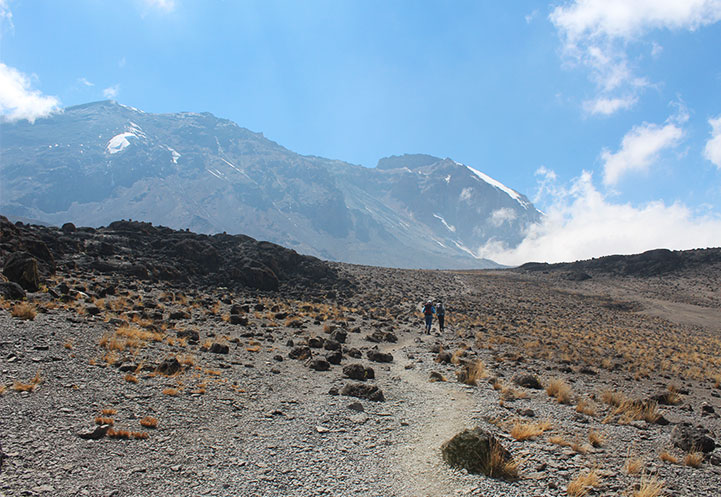
As the trail gradually climbs, the dense rainforest begins to thin. Towering trees give way to giant heather, wildflowers, and open moorland, revealing increasingly impressive views across Kilimanjaro’s western slopes.
Before long, you’ll emerge above the forest canopy and witness your first panoramic views of Kibo Peak, Kilimanjaro’s highest volcanic cone and the destination you’ve been working toward.
For many climbers, this is the moment when the true scale of Mount Kilimanjaro becomes clear.
Discover the Ancient Shira Plateau
The Shira Plateau is one of Kilimanjaro’s greatest natural wonders.
Millions of years ago, Shira was an active volcanic cone. Over time, volcanic activity ceased, and the summit collapsed, creating the vast plateau that stretches across Kilimanjaro’s western side today.
Walking across this ancient volcanic landscape is like stepping into another world.
Wide-open plains, scattered lava rocks, giant groundsels, everlasting flowers, and dramatic mountain vistas create one of the most scenic trekking environments anywhere in Africa.
Unlike the enclosed rainforest of Day 1, today’s trail feels expansive and limitless, with spectacular views in nearly every direction.
Your First Taste of High-Altitude Trekking
As you continue climbing, you’ll begin to notice the cooler temperatures and thinner mountain air.
Today’s altitude gain is significant, making it important to maintain a steady “Pole Pole” pace.
Your guides will continue monitoring how everyone is adapting to the altitude while encouraging regular hydration and short rest breaks.
Although you may notice yourself breathing a little harder than yesterday, this is a normal part of ascending gradually on Mount Kilimanjaro.
The carefully designed itinerary allows your body to adjust naturally before reaching the higher elevations later in the climb.
Arrive at Shira 1 Camp
By afternoon, you’ll arrive at Shira 1 Camp, beautifully positioned on the edge of the vast Shira Plateau.
From camp, you’ll enjoy sweeping views of the surrounding moorland and, on clear days, magnificent views toward Kibo Peak.
As the sun begins to set, the landscape transforms into shades of gold and orange, creating one of the most memorable evenings of the expedition.
After a freshly prepared dinner, your guides will conduct another routine health assessment and brief you on the exciting journey across the plateau the following day.
With every step, you’re becoming stronger, better acclimatized, and one day closer to standing on the Roof of Africa.
Why Day 2 Is So Important
Today’s hike is about more than gaining altitude.
It marks your transition into Kilimanjaro’s high-mountain environment.
Leaving the rainforest behind and entering the heather and moorland zone allows your body to adapt gradually while introducing you to the breathtaking landscapes that make the Lemosho Route so highly regarded.
This combination of moderate climbing, spectacular scenery, and controlled acclimatization is one of the reasons why the 8 Days Lemosho Route consistently achieves such impressive summit success rates.
A Landscape Unlike Anywhere Else
The Shira Plateau is one of the few places on Earth where you can walk across the remains of an ancient volcanic crater while enjoying uninterrupted views of Africa’s highest mountain.
Its wide-open spaces, unusual alpine vegetation, and peaceful atmosphere create a trekking experience unlike any other route on Kilimanjaro.
For photographers, this is often the day when the mountain truly begins to reveal its grandeur.
Day 3: Shira 1 Camp (3,505 m) to Shira 2 Camp (3,850 m)
Elevation
3,505 m (11,499 ft) to 3,850 m (12,631 ft)
Distance
Approximately 7 km (4.3 miles)
Hiking Time
3–5 hours
Habitat
Heather and Moorland to Alpine Moorland
Cross the Legendary Shira Plateau
Wake up to crisp mountain air and spectacular views stretching across the vast Shira Plateau, one of Mount Kilimanjaro’s most remarkable geological features. After breakfast, today’s trek continues across this ancient volcanic landscape, offering a relaxed pace that allows you to fully appreciate the mountain’s incredible scenery while continuing your acclimatization.
Unlike the previous day’s steady climb, today’s hike is shorter and less demanding, giving your body valuable time to adjust to the altitude before the more challenging stages ahead.
The trail winds across rolling volcanic plains surrounded by giant groundsels, everlasting flowers, and scattered lava rocks that tell the story of Kilimanjaro’s volcanic past.
As the plateau opens around you, Kibo Peak appears larger and more impressive with every step, while the distant plains of Tanzania stretch toward the horizon on clear days.
Experience One of Africa’s Most Extraordinary Landscapes
Few places in Africa offer scenery quite like the Shira Plateau.
Located at more than 3,500 metres above sea level, this immense plateau is believed to be the remains of Kilimanjaro’s oldest volcanic cone. Millions of years of volcanic activity and erosion shaped the dramatic landscape you see today.
Walking here feels completely different from trekking through a forest.
Wide-open skies, endless mountain views, and the peaceful silence of the plateau create an atmosphere that many climbers describe as both calming and inspiring.
This is one of the reasons photographers often rank the Lemosho Route as the most scenic path to Uhuru Peak.
Acclimatization Is the Goal Today
Although today’s elevation gain is relatively modest, it plays a vital role in preparing you for the higher altitudes that lie ahead.
Your guides will continue following the “Pole Pole” approach, maintaining a slow and consistent pace while encouraging regular hydration and nutritious meals.
This gradual progression allows your body to adapt naturally to decreasing oxygen levels, helping reduce the likelihood of altitude-related symptoms later in the expedition.
Throughout the day, your guides will continue routine health assessments, checking how each climber is responding to the altitude and ensuring everyone remains comfortable and confident.
Optional Acclimatization Walk to Cathedral Peak
Depending on your group’s pace, weather conditions, and guide’s recommendation, there may be an opportunity for a short acclimatization hike toward Cathedral Peak (3,872 m)—one of the highest points on the Shira Plateau.
This optional excursion follows the important mountaineering principle of “climb high, sleep low.”
By spending a short period at a slightly higher elevation before returning to camp, your body receives another opportunity to adapt to the thinner mountain air.
While not every itinerary includes this walk, it can provide valuable acclimatization benefits and rewarding panoramic views across the plateau.
Arrive at Shira 2 Camp
By early afternoon, you’ll arrive at Shira 2 Camp, perfectly positioned beneath the towering slopes of Kibo Peak.
The camp offers breathtaking views in every direction, making it an ideal place to relax, enjoy a freshly prepared meal, and reflect on the progress you’ve made over the past three days.
As the afternoon light illuminates the volcanic landscape, you’ll begin to appreciate just how much the mountain has changed since leaving the rainforest.
Tomorrow brings one of the most important acclimatization days of the expedition as you climb to Lava Tower before descending into the spectacular Barranco Valley.
Why Day 3 Matters
Some climbers think today’s shorter hike is an easy day.
In reality, it is one of the smartest parts of the entire itinerary.
Rather than rushing higher, today’s schedule gives your body time to recover while continuing to adjust to the altitude.
This careful pacing is one of the biggest reasons why the 8 Days Lemosho Route consistently delivers higher summit success rates than shorter itineraries.
The stronger you acclimatize today, the better prepared you’ll be for Lava Tower, Barranco Wall, and ultimately Uhuru Peak.
Day 4: Shira 2 Camp (3,850 m) to Lava Tower (4,630 m) to Barranco Camp (3,960 m)
Elevation
3,850 m (12,631 ft) to 4,630 m (15,190 ft), then descend to 3,960 m (12,992 ft)
Distance
Approximately 10 km (6.2 miles)
Hiking Time
6–8 hours
Habitat
Alpine Moorland to Alpine Desert
Climb High, Sleep Low – The Secret Behind Lemosho’s Success
Today is one of the most important days of your Kilimanjaro expedition—not because you’ll climb the highest altitude so far, but because you’ll give your body the best possible opportunity to adapt before the summit attempt.
After breakfast at Shira 2 Camp, you’ll continue your ascent into Kilimanjaro’s dramatic alpine desert. The landscape changes once again as vegetation becomes sparse, volcanic rock dominates the trail, and the air grows noticeably cooler and thinner.
With every step, Kibo Peak appears closer, while the rugged volcanic terrain reminds you that you’re trekking across one of Africa’s most extraordinary mountains.
Today’s hike follows the internationally recognized mountaineering principle of “climb high, sleep low,” one of the most effective acclimatization strategies used on high-altitude expeditions around the world.
Reach the Famous Lava Tower
The trail gradually climbs toward Lava Tower (4,630 metres / 15,190 feet), an enormous volcanic rock formation created thousands of years ago during Kilimanjaro’s volcanic past.
Standing beneath this towering landmark is one of the highlights of the entire Lemosho Route.
Often called the “Shark’s Tooth,” Lava Tower rises dramatically above the surrounding alpine desert and provides spectacular panoramic views across the mountain.
Many climbers take a well-earned break here, enjoying lunch while appreciating the remarkable scenery and allowing their bodies time to experience the higher altitude.
At over 4,600 metres, some trekkers may notice mild altitude symptoms such as shortness of breath or a light headache. This is perfectly normal and one of the reasons today’s itinerary is so carefully designed.
Your experienced guides will continue monitoring everyone’s condition, encouraging hydration, steady breathing, and a relaxed pace throughout the day.
Descend into the Beautiful Barranco Valley
After spending time at Lava Tower, you’ll begin descending toward Barranco Camp.
Almost immediately, you’ll notice breathing becoming easier as you lose altitude.
The descent leads into the spectacular Barranco Valley, one of the most beautiful sections of Mount Kilimanjaro.
Towering cliffs, giant groundsels, colorful alpine plants, and dramatic volcanic scenery surround the trail, creating an unforgettable contrast to the barren alpine desert you crossed earlier.
As you approach camp, the famous Barranco Wall comes into view—an impressive rock face that you’ll climb tomorrow morning.
Although it may appear intimidating from below, your guides will explain why it is far less difficult than most climbers expect.
Why Today Is the Key to Summit Success
Many experienced Kilimanjaro guides consider Day 4 the most valuable acclimatization day of the entire expedition.
Here’s why:
By hiking to 4,630 metres before descending to sleep nearly 700 metres lower, your body receives an important physiological signal to begin adapting to lower oxygen levels.
During this process, your body gradually improves its ability to transport oxygen through increased red blood cell production and other natural adjustments.
This is one of the main reasons why climbers following the 8 Days Lemosho Route often enjoy significantly higher summit success rates than those attempting shorter itineraries.
The goal today isn’t simply reaching Lava Tower—it’s preparing your body for standing on Uhuru Peak in just a few days.
Arrive at Barranco Camp
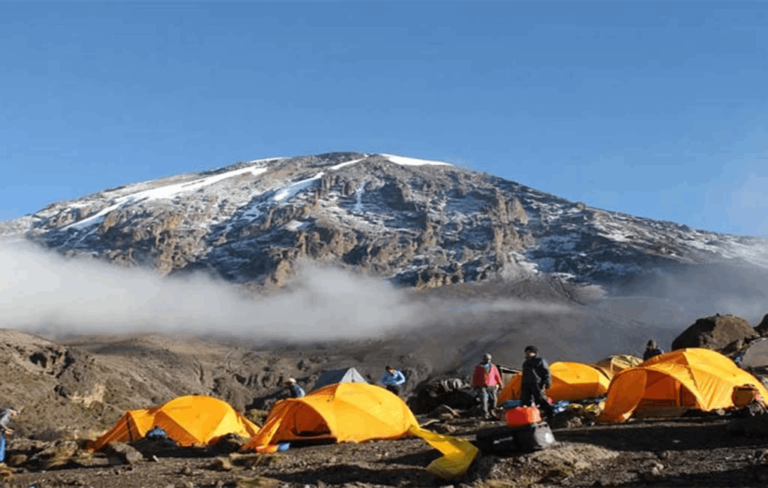
Nestled beneath the towering cliffs of the Barranco Wall, Barranco Camp is one of Kilimanjaro’s most spectacular campsites.
Surrounded by giant senecios, volcanic ridges, and sweeping mountain views, it offers a peaceful place to recover after one of the expedition’s most rewarding days.
After enjoying another freshly prepared dinner, your guides will perform their routine evening health checks before briefing you on tomorrow’s exciting climb up the famous Barranco Wall.
Many climbers arrive at camp feeling stronger than expected, thanks to the beneficial effects of today’s carefully planned acclimatization schedule.
Day 5: Barranco Camp (3,960 m) to Karanga Camp (4,035 m)
Elevation
3,960 m (12,992 ft) to 4,035 m (13,238 ft)
Distance
Approximately 5 km (3.1 miles)
Hiking Time
4–5 hours
Habitat
Alpine Desert
Conquer the Famous Barranco Wall
Today begins with one of the most exciting and memorable experiences on the entire 8 Days Lemosho Route—climbing the legendary Barranco Wall.
After an early breakfast at Barranco Camp, you’ll leave camp and make your way toward the towering rock face that rises dramatically above the valley. From below, the wall looks steep and intimidating, causing many climbers to wonder whether they will be able to climb it.
The good news is that the Barranco Wall is much easier than it appears.
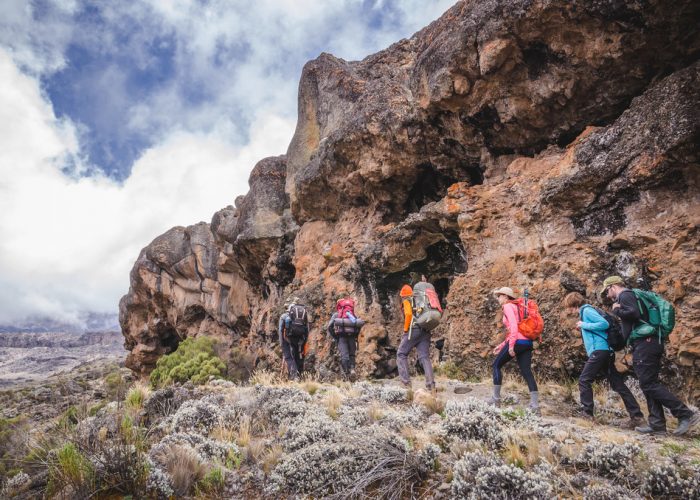
Rather than technical rock climbing, it involves a steady scramble over natural rock ledges while following a well-established trail. There are no ropes, harnesses, or climbing experience required. Your experienced guides will lead the way, pointing out the safest footing and offering encouragement whenever needed.
For most trekkers, the Barranco Wall quickly becomes one of the most enjoyable and rewarding sections of the entire Kilimanjaro climb.
Incredible Views Above the Barranco Valley
As you climb higher, you’ll be rewarded with breathtaking views back across the Barranco Valley, where giant senecios, volcanic ridges, and dramatic cliffs create one of Kilimanjaro’s most spectacular landscapes.
Looking ahead, the massive slopes of Kibo Peak dominate the skyline, reminding you that the summit is now only a few days away.
Once you reach the top of the wall, you’ll follow a scenic ridge with panoramic views stretching across the southern glaciers, alpine valleys, and rugged volcanic terrain.
Many climbers stop frequently—not because the trail is difficult, but because the scenery is simply too beautiful to rush.
A Short Day with a Big Purpose
Although today’s distance is relatively short, it serves an important purpose within the itinerary.
After several demanding days of trekking and yesterday’s acclimatization hike to Lava Tower, today’s schedule allows your body to recover while continuing to adapt to the altitude.
The gentle pace also helps conserve energy for the summit attempt, which is now just two days away.
Throughout the day, your guides will continue routine health assessments, encourage regular hydration, and ensure everyone maintains the steady “Pole Pole” rhythm that has brought you this far.
Arrive at Karanga Camp
By early afternoon, you’ll arrive at Karanga Camp, beautifully situated on a rocky ridge overlooking the surrounding valleys.
The shorter hiking day provides valuable time to relax, enjoy a hot meal, organize your summit equipment, and appreciate the peaceful alpine environment.
Many climbers spend the afternoon taking photographs, chatting with their mountain crew, or simply enjoying the spectacular views while resting before the final ascent to Barafu Camp tomorrow.
As the sun sets over the mountain, excitement begins to build. The summit is now within reach.
Why the Barranco Wall Isn’t as Difficult as You Think
The Barranco Wall has earned an impressive reputation, but most climbers are pleasantly surprised after completing it.
While you’ll occasionally use your hands for balance, the route is more of a controlled scramble than a climb.
Your guides know every section of the trail and will carefully manage the pace to ensure everyone climbs comfortably and safely.
For many guests, reaching the top of the wall becomes a turning point in the expedition—boosting confidence and proving they are ready for the challenges ahead.
Day 6: Karanga Camp (4,035 m) to Barafu Camp (4,673 m)
Elevation
4,035 m (13,238 ft) to 4,673 m (15,331 ft)
Distance
Approximately 4 km (2.5 miles)
Hiking Time
3–4 hours
Habitat
Alpine Desert
Reach Barafu Camp – Your Final Base Before the Summit
After breakfast at Karanga Camp, you’ll continue your journey through Kilimanjaro’s rugged alpine desert toward Barafu Camp, the final campsite before your summit attempt.
Although today’s hike is relatively short, every step feels significant. The landscape becomes increasingly rocky and barren, with little vegetation surviving in the harsh, high-altitude environment. Towering volcanic ridges, loose scree, and sweeping mountain views create a dramatic setting that reminds you just how close you are to the highest point in Africa.
As you gain elevation, the air becomes noticeably thinner. Your guides will continue to set a slow, steady pace, encouraging frequent hydration and monitoring everyone’s condition. This is not a day to rush—your energy is best saved for the summit climb ahead.
Enter Kilimanjaro’s High-Altitude World
The route to Barafu Camp passes through one of Kilimanjaro’s most extreme environments.
The name “Barafu” means “ice” in Swahili, a fitting description for this exposed camp located just below the summit zone. Here, temperatures are colder, the air is drier, and the landscape is dominated by volcanic rock rather than vegetation.
Despite the harsh conditions, the views are extraordinary. On clear days, you’ll enjoy panoramic vistas across the southern glaciers, distant peaks, and the vast plains of Tanzania stretching far below.
Standing at Barafu Camp, you’ll truly appreciate the scale of your achievement so far—and realize that the summit is now within reach.
Prepare for Summit Night
You’ll usually arrive at Barafu Camp around lunchtime, giving you several hours to rest before your midnight wake-up call.
This afternoon is dedicated entirely to preparation.
After enjoying a warm meal, you’ll organize your summit gear with the help of your guides. They’ll carefully check that you have everything you need for the cold overnight ascent, including:
- Insulated layers.
- Waterproof jacket and trousers.
- Warm gloves and hat.
- Headlamp with spare batteries.
- Trekking poles.
- Snacks and water.
- Camera for sunrise at Uhuru Peak.
Your guides will also provide a detailed briefing on the summit route, explain what to expect during the night climb, and answer any final questions.
Their experience and reassurance help many climbers feel calm and confident before the biggest challenge of the expedition.
Rest Is Part of the Climb
Although excitement is building, one of the most important tasks this afternoon is simply to rest.
Most climbers try to sleep for a few hours before the midnight departure, even if only lightly. Conserving energy now can make a significant difference during the demanding ascent to the summit.
Hydration also becomes especially important.
Your guides will encourage you to drink regularly throughout the afternoon and evening while enjoying an early dinner before heading to your tent.
As darkness falls over the mountain, the lights of other climbing teams may begin to appear across the slopes, creating a magical atmosphere that reminds everyone they are part of one of the world’s great mountaineering adventures.
Why Today Matters
Today’s hike is not about covering a long distance.
It’s about arriving at Barafu Camp healthy, well-rested, and mentally prepared for the summit attempt.
By reaching camp early, your body has valuable time to recover from the previous days while adjusting to the altitude.
Combined with the excellent acclimatization built into the 8 Days Lemosho Route, this preparation gives you the strongest possible foundation for reaching Uhuru Peak.
Day 7: Barafu Camp (4,673 m) to Uhuru Peak (5,895 m) to Mweka Camp (3,100 m)
Elevation
4,673 m (15,331 ft) → 5,895 m (19,341 ft) → 3,100 m (10,170 ft)
Distance
Approximately 17 km (10.5 miles)
Hiking Time
10–14 Hours
Habitat
Arctic Zone → Alpine Desert → Montane Forest
Summit Day – Stand on the Roof of Africa
Today is the day you’ve been preparing for since you first dreamed of climbing Mount Kilimanjaro.
Around midnight, you’ll be gently awakened by your guides with a warm drink and a light meal before putting on your summit gear. Outside, the mountain is silent. Above you, thousands of stars illuminate the African sky while the lights of other climbing teams slowly begin moving uphill in the darkness.
After one final equipment check, your journey to the highest point in Africa begins.
This is the most challenging and rewarding day of the entire expedition.
Begin the Midnight Ascent
Leaving Barafu Camp, you’ll climb slowly across steep volcanic scree under the light of your headlamp.
The air is now extremely thin, containing almost half the oxygen available at sea level. Even simple movements require more effort, making patience and pacing more important than ever.
Your guides will continuously encourage the famous Swahili phrase:
“Pole Pole.”
Slowly.
Step by step.
Breath by breath.
Unlike many mountains where speed matters, Kilimanjaro rewards consistency.
Every slow step brings you closer to your dream.
Throughout the climb, your guides carefully monitor every member of the group, ensuring everyone remains hydrated, warm, and physically comfortable.
Reach Stella Point (5,756 m)
After several hours of determined climbing, you’ll finally reach Stella Point, located on the crater rim of Kilimanjaro.
For many climbers, this is an emotional milestone.
As dawn begins breaking across East Africa, the first rays of sunlight illuminate the glaciers surrounding the summit while the clouds below slowly turn shades of orange, pink, and gold.
Many guests pause here for photographs, a short rest, and words of encouragement from their guides before continuing the final stretch.
Although you’ve already climbed an incredible distance, the journey isn’t quite finished.
The summit awaits.
The Final Walk to Uhuru Peak
From Stella Point, the trail becomes less steep and follows the crater rim toward Uhuru Peak (5,895 metres / 19,341 feet).
This final section is often surprisingly emotional.
You’ll pass ancient glaciers, frozen volcanic landscapes, and breathtaking views that stretch across Tanzania and Kenya.
Every step brings the famous wooden summit sign closer.
Then finally…
You arrive.
Congratulations – You’ve Reached Uhuru Peak!
Standing beside the famous Uhuru Peak sign is a moment few people ever forget.
At 5,895 metres, you’ve reached:
- The highest point in Tanzania.
- The highest mountain in Africa.
- The world’s tallest free-standing mountain.
- One of the legendary Seven Summits.
Many climbers celebrate with smiles, laughter, tears, and hugs.
Some stand quietly, taking in the incredible achievement.
Others simply look across the glaciers and endless African plains, realizing they have accomplished something they once thought impossible.
This is your moment.
Take photographs.
Celebrate with your team.
Enjoy the sunrise.
You’ve earned it.
Begin the Descent
After spending time at the summit, you’ll begin descending back toward Barafu Camp.
Although going downhill feels easier on your lungs, it requires concentration, especially on the loose volcanic scree.
Once back at camp, you’ll enjoy a well-deserved hot meal, take a short rest, and collect your remaining equipment before continuing your descent.
The journey then continues through changing landscapes as oxygen levels increase and breathing becomes noticeably easier.
Many climbers are surprised by how much stronger they feel after leaving the summit zone.
Arrive at Mweka Camp
By late afternoon or early evening, you’ll reach Mweka Camp, located within Kilimanjaro’s upper rainforest.
The return of trees, fresh air, and richer oxygen is a welcome reward after one of the most demanding days of the expedition.
Your mountain crew will be waiting with congratulations, warm food, and a chance to celebrate the incredible achievement of reaching Africa’s highest peak.
As night falls, you’ll enjoy one final evening on the mountain surrounded by the guides and porters who helped make your summit possible.
Why Summit Day Is More Than Reaching the Top
Climbing Kilimanjaro isn’t simply about standing on Uhuru Peak.
It’s about the journey that brought you there.
Over the past seven days, you’ve crossed five ecological zones, adapted to high altitude, overcome physical and mental challenges, and experienced landscapes found nowhere else on Earth.
The summit is the reward—but the adventure itself is what you’ll remember for the rest of your life.
Day 8: Mweka Camp (3,100 m) to Mweka Gate (1,640 m)
Elevation
3,100 m (10,170 ft) to 1,640 m (5,380 ft)
Distance
Approximately 10 km (6.2 miles)
Hiking Time
3–4 Hours
Habitat
Montane Rainforest
Descend Through the Rainforest and Celebrate Your Achievement
Your final morning on Mount Kilimanjaro begins with a well-earned breakfast surrounded by the lush rainforest of Mweka Camp. After the excitement and challenge of summit day, today’s descent is relaxed and reflective, giving you time to appreciate everything you’ve accomplished over the past eight days.
The trail winds downhill beneath a canopy of towering trees, giant ferns, and vibrant tropical vegetation. As you descend into lower elevations, the air becomes warmer, richer in oxygen, and filled once again with the sounds of birds and forest wildlife.
For many climbers, this peaceful walk provides the perfect opportunity to reflect on an unforgettable journey—from the quiet western rainforest of the Lemosho Route to the glaciers of Uhuru Peak and back again.
A Walk Through Kilimanjaro’s Living Forest
The Mweka Route is used by climbers descending from several Kilimanjaro routes and offers one final opportunity to experience the mountain’s extraordinary biodiversity.
As you make your way through the rainforest, keep an eye out for:
- Black-and-white colobus monkeys.
- Blue monkeys.
- Colorful turacos and hornbills.
- Giant tree ferns.
- Wildflowers and moss-covered trees.
After several days in the alpine desert, returning to the green forests feels like entering a completely different world.
The changing scenery is a reminder that Mount Kilimanjaro is home to one of Africa’s most diverse ecosystems, spanning five distinct ecological zones from tropical rainforest to Arctic summit.
Receive Your Kilimanjaro Summit Certificate
Upon reaching Mweka Gate, you’ll officially complete your Mount Kilimanjaro expedition.
After signing out with the national park authorities, successful climbers receive their official Kilimanjaro National Park Summit Certificate.
- Green Certificate – Awarded to climbers who reach Uhuru Peak (5,895 m).
- Blue Certificate – Awarded to climbers who reach Stella Point (5,756 m).
Receiving your certificate is a proud moment that recognizes your determination, perseverance, and achievement in reaching one of the world’s most famous mountain summits.
Don’t forget to take photos with your certificate—it’s a memory you’ll treasure for years to come.
Celebrate with Your Mountain Team
One of the most memorable parts of finishing a Kilimanjaro climb is celebrating with the incredible team that helped make your adventure possible.
Throughout the expedition, your guides, assistant guides, cooks, and porters have worked tirelessly to ensure your safety, comfort, and success.
At the end of the trek, it’s common for climbers and mountain crews to celebrate together, sharing congratulations, taking group photos, and reflecting on the journey.
For many visitors, these moments become some of the most meaningful memories of their time in Tanzania.
At Trace on Savannah Tours & Safaris, we are proud of our dedicated mountain team, whose professionalism, local knowledge, and genuine hospitality help turn every climb into an unforgettable experience.
Return to Your Hotel
After the celebrations, you’ll board your transfer back to your hotel in Moshi or Arusha.
A hot shower, a comfortable bed, and a delicious meal await—but so does the incredible satisfaction of knowing you’ve stood on the highest point in Africa.
Many climbers spend the evening sharing photos, contacting family and friends, and reliving their favorite moments from the expedition.
Although your Kilimanjaro climb has come to an end, the memories, friendships, and sense of achievement will stay with you forever.
Day 9: Mweka Camp – Mweka Gate – Arusha
Distance: 10 km | Time: 3–4 hours | Habitat: Rainforest
After breakfast, descend through the lush rainforest to Mweka Gate, where climbers receive their summit certificates. Meet your driver and transfer back to Arusha or Moshi for a well-earned rest or onward travel.
Meals: Breakfast & Lunch
Accommodation: None (End of tour)
Price Include
- All park entrance, camping, and rescue fees
- Professional English-speaking mountain guides
- Porters and cooks
- Full board meals during the climb
- Camping equipment (tents, dining tent, chairs, table)
- Drinking water and hot beverages
- Round-trip transfers between Arusha/Moshi and Londorossi Gate
- Certificate of achievement
Price Exclude
- International and domestic flights
- Visa fees and travel insurance
- Sleeping bag and personal climbing gear
- Tips for guides, cooks, and porters
- Extra accommodation before/after the climb
- Personal expenses (laundry, souvenirs, etc.)
Route Overview (Quick Facts)
| Route Overview | Details |
|---|---|
| Duration | 8 Days |
| Route | Lemosho Route |
| Starting Point | Londorossi Gate (Western Kilimanjaro) |
| Ending Point | Mweka Gate |
| Highest Point | Uhuru Peak (5,895 m / 19,341 ft) |
| Difficulty | Moderate to Challenging |
| Success Rate | Excellent (one of Kilimanjaro’s highest with proper acclimatization) |
| Accommodation | Mountain Camping |
| Best For | First-time climbers, photographers, and those seeking the highest chance of summiting |
| Pickup Available | Arusha & Moshi |
| Best Climbing Seasons | January–March & June–October |