7 Days Machame Route – The Ultimate Kilimanjaro Climbing Experience
7 Days Machame Route – Climb Mount Kilimanjaro with Tanzania's Trusted Local Experts
The 7 Days Machame Route is one of the most popular and rewarding ways to climb Mount Kilimanjaro, Africa’s highest mountain at 5,895 meters (19,341 feet). Known as the Whiskey Route, it combines breathtaking scenery, excellent acclimatization, and one of the highest summit success rates among Kilimanjaro’s trekking routes.
At Trace on Savannah Tours & Safaris, we guide adventurers from the United Kingdom, the United States, Germany, France, and around the world on unforgettable Kilimanjaro expeditions led by experienced local mountain guides. Our 7-day itinerary follows the “climb high, sleep low” principle, allowing your body more time to adjust to the altitude and significantly improving your chances of reaching Uhuru Peak safely.
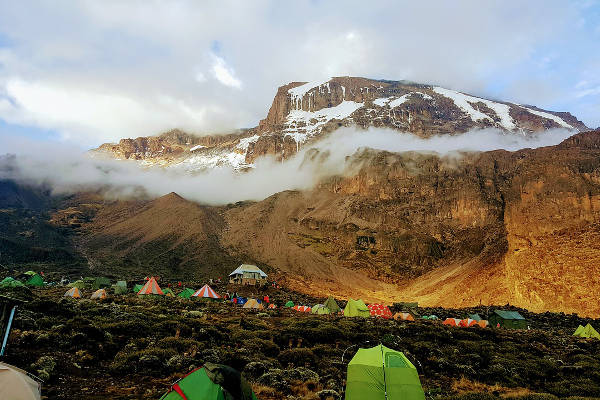
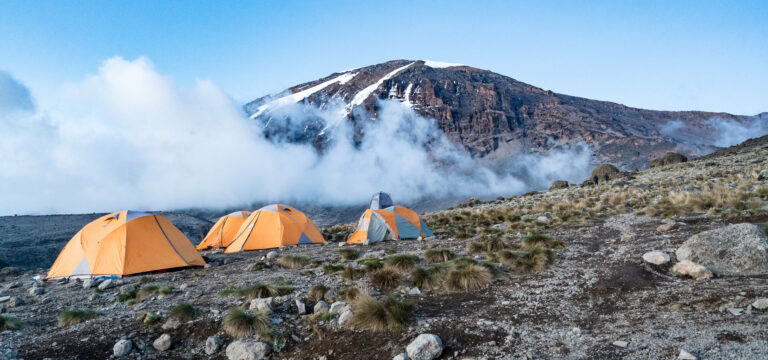
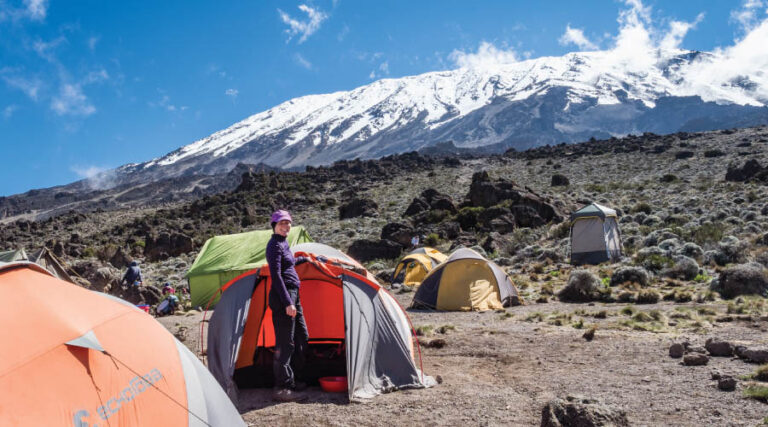
Throughout this journey, you’ll trek through five unique ecological zones, from the lush rainforest surrounding Machame Gate to the alpine desert, dramatic rock formations like Lava Tower and the iconic Barranco Wall, before reaching the glaciers and the Roof of Africa.
Whether you’re an experienced trekker or taking on your first high-altitude adventure, our professionally organized climbs include certified mountain guides, trained cooks, quality camping equipment, daily health checks, and personalized support from start to finish.
If you’re looking for the perfect balance between adventure, scenery, acclimatization, and summit success, the 7 Days Machame Route is widely regarded as one of the best choices for climbing Kilimanjaro.
Why Choose the 7 Days Machame Route?
The 7 Days Machame Route is widely considered the best combination of scenery, acclimatization, and summit success on Mount Kilimanjaro. For travelers from the UK, USA, Germany, and France, it offers a more rewarding and safer climbing experience than many shorter itineraries.
Unlike the easier but less scenic Marangu Route, the Machame Route approaches the summit from the southwest and crosses a variety of dramatic landscapes, including rainforest, moorland, alpine desert, and glacier-covered summit terrain. The route also descends via the Mweka Route, giving climbers a completely different set of views on the way down.
One of the biggest advantages of the 7-day itinerary is the extra acclimatization day. The route follows the proven “climb high, sleep low” principle, particularly on the Lava Tower day, where climbers ascend above 4,600 m before descending to sleep lower at Barranco Camp. This significantly improves altitude adaptation and increases the likelihood of reaching Uhuru Peak.
For international travelers investing in a once-in-a-lifetime Kilimanjaro expedition, the additional day is often the difference between merely attempting the summit and successfully standing on the Roof of Africa.
Why We Recommend 7 Days Instead of 6 Days
Many operators sell a 6-day Machame Route, but it skips an important acclimatization opportunity. The 7-day version allows your body more time to adapt to the altitude, making the climb safer and more enjoyable.
Our recommendation
For travelers flying from Europe or North America, we strongly recommend the 7-day itinerary because it provides better acclimatization, a higher summit success rate, and a less rushed experience on the mountain.
7 Days Machame Route Itinerary
Every day on the 7 Days Machame Route brings new landscapes, changing ecosystems, and breathtaking views as you make your way to Uhuru Peak, the highest point in Africa. Starting with a transfer from Arusha or Moshi to Machame Gate, the trek follows a carefully planned itinerary designed to maximize acclimatization and improve your chances of reaching the summit safely.
Led by our experienced local mountain guides, you’ll pass through lush rainforest, open moorland, alpine desert, dramatic volcanic formations, and glaciated summit terrain before descending through the scenic Mweka Route. This gradual approach allows your body to adapt to the altitude while giving you time to appreciate the incredible beauty of Mount Kilimanjaro National Park.
Below is the complete day-by-day itinerary.
Day 1: Arusha or Moshi – Machame Gate (1,800 m) – Machame Camp (3,000 m)
Elevation: 1,800 m to 3,000 m
Distance: Approximately 11 km (7 miles)
Hiking Time: 5–7 hours
Habitat: Rainforest
Your adventure begins with an early morning pick-up from your hotel in Arusha or Moshi before driving to Machame Gate, where your guides complete park registration and introduce you to the mountain crew.
After final equipment checks, you’ll enter the lush rainforest that covers the lower slopes of Mount Kilimanjaro. Towering trees, hanging mosses, giant ferns, and colorful birdlife create an unforgettable first impression of Africa’s highest mountain. If you’re lucky, you may even spot blue monkeys or black-and-white colobus monkeys along the trail.
The trail gradually climbs through dense forest on well-maintained paths. Although this is the longest walking day before the summit push, the steady pace allows everyone to settle into the rhythm of the trek while your guides monitor hydration and acclimatization.
By late afternoon, you’ll arrive at Machame Camp, where your tents will already be prepared by our mountain crew. Enjoy a freshly cooked dinner, receive your evening health check, and rest beneath the forest canopy before the climb continues the following morning.
Meals Included: Breakfast (depending on departure time), Lunch, Dinner
Accommodation: Mountain Camping – Machame Camp
Why this day matters
Although the altitude gain is significant, today’s objective is not speed—it’s establishing a comfortable hiking pace. Our guides encourage the famous “pole pole” (slowly, slowly) approach, helping your body begin adapting to the increasing elevation while conserving energy for the days ahead.
Day 2: Machame Camp (3,000 m) to Shira Camp (3,840 m)
Elevation
3,000 m (9,843 ft) to 3,840 m (12,598 ft)
Distance
Approximately 5 km (3 miles)
Hiking Time
4–6 hours
Habitat
Heather and Moorland
After a nourishing breakfast prepared by our mountain crew, you’ll leave the dense rainforest behind and begin ascending into Kilimanjaro’s spectacular heather and moorland zone. As the forest gradually opens, you’ll notice the landscape changing dramatically, with giant heathers, volcanic rock formations, and sweeping views replacing the lush vegetation of the previous day.
Today’s trail is shorter than Day 1 but noticeably steeper, allowing you to gain significant altitude while maintaining a comfortable “pole pole” pace. As you climb higher, the air becomes cooler and clearer, revealing breathtaking panoramas of Mount Meru on clear days and the vast plains stretching far below.
One of the highlights of the day is your first uninterrupted view of Kibo Peak, the highest of Kilimanjaro’s three volcanic cones and home to Uhuru Peak, your ultimate destination. This is often the moment when the reality of climbing Africa’s highest mountain truly begins to sink in.
The trail continues across rocky ridges before reaching the expansive Shira Plateau, one of the world’s highest volcanic plateaus. Formed thousands of years ago by volcanic activity, this unique landscape offers incredible photo opportunities and a glimpse into Kilimanjaro’s fascinating geological history.
Upon arrival at Shira Camp, our team will have your tents ready, along with hot drinks and freshly prepared meals. After lunch or dinner, your guides will carry out a routine health assessment, checking oxygen saturation and discussing how your body is adapting to the increasing altitude. These daily health checks are an essential part of our commitment to your safety throughout the expedition.
As the sun begins to set, the sky over the plateau transforms into one of Kilimanjaro’s most unforgettable scenes. On clear evenings, countless stars illuminate the mountain, creating an incredible atmosphere before another exciting day of trekking.
Why This Day Is Important
Although today’s distance is relatively short, it plays a crucial role in your acclimatization. The gradual altitude gain allows your body to begin adjusting to thinner air while conserving energy for the more demanding days ahead.
Many climbers notice mild changes in breathing or heart rate at this elevation. This is completely normal, and our experienced mountain guides will monitor your condition closely while encouraging proper hydration, balanced nutrition, and a steady hiking pace.
Day 3: Shira Camp (3,840 m) – Lava Tower (4,630 m) – Barranco Camp (3,960 m)
Elevation
3,840 m (12,598 ft) to 4,630 m (15,190 ft), then descend to 3,960 m (12,992 ft)
Distance
Approximately 10 km (6.2 miles)
Hiking Time
6–8 hours
Habitat
Moorland to Alpine Desert
Day 3 is often considered the most important day of the entire 7 Days Machame Route. While reaching Uhuru Peak is the ultimate goal, today’s trek lays the foundation for a successful summit by giving your body the time it needs to adapt to Kilimanjaro’s high altitude.
After breakfast at Shira Camp, the trail gradually climbs across the open alpine landscape toward the famous Lava Tower, a dramatic volcanic rock formation standing at 4,630 metres (15,190 feet) above sea level. As vegetation becomes increasingly sparse, you’ll notice the mountain transforming into a rugged alpine desert, shaped by ancient volcanic activity and extreme weather conditions.
The hike is steady rather than technical, allowing you to appreciate breathtaking views of Kibo Peak, distant valleys, and the vast wilderness of Mount Kilimanjaro National Park. Along the way, your guides will continue to encourage the “pole pole” pace while monitoring your hydration and overall wellbeing.
For many climbers, this is the first time they experience the effects of high altitude. Mild headaches, increased breathing, or reduced appetite can occur as your body adjusts to the thinner air. These symptoms are common and are carefully monitored by our experienced mountain guides through routine health assessments and oxygen saturation checks.
After reaching Lava Tower, you’ll stop for lunch and spend time at the higher elevation before beginning a gradual descent to Barranco Camp.
This descent is intentional and forms the heart of Kilimanjaro’s most effective acclimatization strategy.
By climbing to a higher altitude before sleeping at a lower elevation, your body begins producing the physiological adaptations needed for summit day while allowing you to recover overnight. This internationally recognized “climb high, sleep low” approach is one of the main reasons why the 7 Days Machame Route consistently achieves higher summit success rates than shorter itineraries.
As you descend into the beautiful Barranco Valley, the scenery changes once again. Towering cliffs, unique giant groundsels, and enormous lobelia plants create one of the most photogenic landscapes on Mount Kilimanjaro. Nestled beneath the impressive Barranco Wall, Barranco Camp is widely regarded as one of the mountain’s most spectacular campsites.
After arriving at camp, you’ll enjoy a freshly prepared dinner while your guides conduct another evening health check and provide a briefing for tomorrow’s exciting climb up the Barranco Wall.
Why This Day Is So Important
Many climbers believe summit success depends on physical fitness alone.
In reality, proper acclimatization is the single most important factor in reaching Uhuru Peak safely.
The hike to Lava Tower is specifically designed to expose your body to a higher altitude before descending to sleep lower at Barranco Camp. This process stimulates your body’s natural adaptation to lower oxygen levels, helping reduce the risk of severe altitude sickness during the summit attempt.
This is one of the biggest reasons why we recommend the 7-day Machame itinerary over the shorter 6-day option, especially for climbers travelling from the United Kingdom, United States, Germany, and France, who often have limited time to adjust after international flights.
Did You Know?
The Lava Tower, sometimes called the Shark’s Tooth, was formed during one of Mount Kilimanjaro’s ancient volcanic eruptions. Rising dramatically from the alpine desert, it is one of the mountain’s most iconic geological landmarks and a favorite stop for photographers before the descent into Barranco Valley.
Day 4: Barranco Camp (3,960 m) – Barranco Wall – Karanga Camp (4,035 m)
Elevation
3,960 m (12,992 ft) to 4,035 m (13,238 ft)
Distance
Approximately 5 km (3.1 miles)
Hiking Time
4–5 hours
Habitat
Alpine Desert
After breakfast beneath the towering cliffs of Barranco Valley, you’ll begin one of the most exciting and memorable days of your 7 Days Machame Route adventure.
Today’s highlight is the famous Barranco Wall, a spectacular rock face that rises above the campsite and has become one of Mount Kilimanjaro’s most iconic landmarks. Although photographs often make it appear intimidating, the Barranco Wall is not a technical rock climb. Instead, it is a rewarding scramble that can be completed safely with the guidance of experienced mountain guides.
As you ascend, your guides will show you the safest route, offering encouragement and assistance whenever needed. There are a few places where you’ll use your hands for balance, but no climbing experience or special equipment is required.
Reaching the top of the wall is a moment many climbers describe as one of the greatest achievements of the trek. From the summit of the Barranco Wall, you’ll be rewarded with breathtaking panoramic views of the Heim Glacier, Kibo Peak, and the valleys stretching thousands of metres below.
After a well-earned rest, the trail follows a series of rolling ridges and valleys through the alpine desert. The scenery becomes increasingly dramatic, with volcanic rock formations, giant groundsels, and wide-open mountain landscapes surrounding your path.
Although today’s distance is relatively short, the combination of altitude and uneven terrain makes a steady pace essential. Your guides will continue to monitor your acclimatization while ensuring everyone remains comfortable throughout the day.
By early afternoon, you’ll arrive at Karanga Camp, where you’ll enjoy a hot meal and have time to rest, hydrate, and prepare for the final ascent to Barafu Camp on the following day.
The shorter hiking day is intentional, allowing your body to recover while continuing its gradual adaptation to the high altitude before summit night.
Why the Barranco Wall Is Famous
The Barranco Wall has earned a legendary reputation among Kilimanjaro climbers, but it is often misunderstood.
Despite its steep appearance, the route is designed so that trekkers can safely climb the wall without ropes or technical climbing equipment. Thousands of climbers successfully complete this section every year.
For many people, conquering the Barranco Wall becomes one of the most memorable moments of the entire expedition—not because it is dangerous, but because it builds confidence and offers some of the most spectacular views on Mount Kilimanjaro.
Expert Tip: Don’t Let the Photos Worry You
Many first-time climbers become nervous after seeing photos of the Barranco Wall online.
In reality, the climb is much easier than it looks.
Our experienced local guides know every section of the trail and will lead you step by step, choosing the safest and most comfortable route for the group. By maintaining a slow pace and following your guide’s instructions, most climbers are surprised by how enjoyable the ascent actually is.
Day 5: Karanga Camp (4,035 m) to Barafu Camp (4,640 m)
Elevation
4,035 m (13,238 ft) to 4,640 m (15,223 ft)
Distance
Approximately 4 km (2.5 miles)
Hiking Time
3–4 hours
Habitat
Alpine Desert
After breakfast at Karanga Camp, you’ll begin the final climb to Barafu Camp, the last campsite before your summit attempt. Although today’s hiking distance is relatively short, it is one of the most important days of the expedition because it prepares you physically and mentally for reaching Uhuru Peak.
The trail climbs steadily through the stark beauty of Kilimanjaro’s alpine desert. Vegetation has almost completely disappeared, replaced by volcanic rocks, rugged ridges, and sweeping views across the mountain. The landscape may appear harsh, but it offers a powerful reminder that you are now approaching one of the highest points on the African continent.
As you gain altitude, every step becomes more deliberate. Your guides will encourage a slow, consistent pace while reminding you to stay hydrated and conserve energy. At this elevation, walking slowly is not a sign of weakness—it’s one of the smartest strategies for a successful summit.
After several hours of trekking, you’ll arrive at Barafu Camp, situated on an exposed rocky ridge overlooking the plains far below. The name “Barafu” means “ice” in Swahili, a fitting description of the cold, high-altitude environment that serves as the launching point for your final ascent.
Upon arrival, our mountain crew will have hot drinks and a freshly prepared meal waiting for you. Unlike previous days, the afternoon is dedicated almost entirely to rest and preparation. Your guides will conduct a detailed summit briefing, review safety procedures, check your equipment, and answer any final questions before the climb.
Because summit night begins around midnight, you’ll be encouraged to eat an early dinner and sleep for a few hours, even if excitement makes it difficult to rest. Every hour of sleep and every bit of energy you save today will help during the challenging hours ahead.
As darkness falls over the mountain, the lights of nearby climbing teams begin to appear across the slopes, creating a unique atmosphere that reminds every climber they are about to attempt one of the world’s most iconic trekking achievements.
Why Barafu Camp Is So Important
Barafu Camp is more than just another campsite—it’s the final staging point before reaching the Roof of Africa.
Everything you do this afternoon contributes to your summit success:
- Hydrating consistently.
- Eating enough, even if your appetite is reduced.
- Organizing your clothing and equipment.
- Listening carefully to your guide’s instructions.
- Getting as much rest as possible before the midnight departure.
Preparation, not speed, is what sets climbers up for a successful summit.
Preparing for Summit Night
Your summit climb will begin shortly after midnight, when temperatures can fall well below freezing.
Before leaving your tent, your guides will help you complete final equipment checks, ensuring you have:
- A warm insulated jacket.
- Waterproof outer layers.
- Thermal base layers.
- Gloves and a warm hat.
- Headlamp with spare batteries.
- Trekking poles.
- Water and high-energy snacks.
Taking a few extra minutes to prepare properly can make a significant difference during the ascent.
Day 6: Barafu Camp (4,640 m) – Stella Point (5,756 m) – Uhuru Peak (5,895 m) – Mweka Camp (3,100 m)
Elevation
4,640 m (15,223 ft) to 5,895 m (19,341 ft), then descend to 3,100 m (10,170 ft)
Distance
Approximately 17 km (10.5 miles)
Hiking Time
10–15 hours
Habitat
Arctic Zone to Rainforest
Summit Day – Reaching the Roof of Africa
Today is the day you’ve been preparing for.
Just before midnight, your guides will gently wake you with a warm drink and a light meal. Outside your tent, the mountain is quiet, the air is crisp, and thousands of stars shine above Kilimanjaro. The lights of other climbing teams can be seen slowly moving up the mountainside, creating an unforgettable scene that marks the beginning of your summit attempt.
After a final equipment check, you’ll leave Barafu Camp and begin the steady climb toward Uhuru Peak, the highest point in Africa.
The trail is steep and challenging, but there is no need to rush. Every member of the group walks at the famous Tanzanian pace of “pole pole”—slowly, steadily, one step at a time. This measured rhythm helps conserve energy and allows your body to cope with the high altitude.
As you climb higher, temperatures often fall well below freezing. The air becomes thinner, making every step feel more demanding. This is where determination, preparation, and the support of your experienced mountain guides become invaluable.
Throughout the ascent, your guides carefully observe every climber, offering encouragement, checking your condition, and adjusting the pace whenever necessary. Their goal is not simply to reach the summit—it is to help you reach it safely.
Sunrise at Stella Point
After several hours of climbing beneath the night sky, you’ll arrive at Stella Point (5,756 metres / 18,885 feet) on the crater rim.
For many climbers, this is one of the most emotional moments of the expedition.
As dawn breaks over East Africa, the first rays of sunlight illuminate the glaciers, volcanic crater, and endless plains stretching across Tanzania and Kenya. Watching the sunrise from this altitude is an experience that few places on Earth can match.
Many climbers pause here to celebrate, take photographs, and enjoy a brief rest before the final push to the summit.
The Final Journey to Uhuru Peak
From Stella Point, the trail becomes more gradual as you follow the crater rim toward Uhuru Peak (5,895 metres / 19,341 feet).
Although the distance is relatively short, this final section requires determination. Every step brings you closer to one of the world’s most iconic trekking achievements.
Standing beside the famous “Congratulations, You Are Now at Uhuru Peak” sign is a moment you’ll never forget.
After days of trekking through rainforest, moorland, alpine desert, and glaciers, you’ve reached the highest point in Africa.
Many climbers describe this moment as life-changing. Some celebrate with cheers, others with quiet reflection, and many with tears of joy. However you experience it, reaching Uhuru Peak is a remarkable achievement that will stay with you forever.
Take time to capture photographs, admire the breathtaking views, and celebrate your accomplishment before beginning the descent.
The Descent to Barafu Camp and Mweka Camp
After spending time at the summit, you’ll begin your descent back to Barafu Camp, where a hot meal and a short rest await.
Following lunch, you’ll continue downhill to Mweka Camp, passing from the arctic environment back into areas where vegetation gradually begins to reappear.
Although descending is physically easier than climbing, it can be demanding on the knees and legs. Trekking poles become especially valuable during this stage, helping reduce strain while maintaining stability on loose volcanic scree.
By late afternoon or early evening, you’ll arrive at Mweka Camp, where your mountain crew will welcome you with congratulations, a warm dinner, and a well-earned opportunity to rest after one of the most memorable days of your life.
Why Summit Day Is Challenging
Summit day combines several demanding factors:
- High altitude with reduced oxygen levels.
- Cold temperatures that often fall below freezing.
- A midnight start after only a few hours of sleep.
- A long day of trekking.
- Physical and mental endurance.
Despite these challenges, thousands of climbers successfully reach Uhuru Peak every year with proper preparation, experienced guides, and a carefully planned itinerary.
The 7 Days Machame Route provides one of the best opportunities for success because of its gradual acclimatization profile.
Safety Is Our Priority
At Trace on Savannah, summit success is important—but your safety always comes first.
Throughout summit night, our experienced mountain guides:
- Monitor every climber’s pace and wellbeing.
- Carry emergency communication equipment.
- Perform regular health assessments throughout the expedition.
- Encourage hydration, nutrition, and proper pacing.
- Make responsible decisions based on each climber’s condition.
We believe the greatest achievement is returning safely with unforgettable memories.
Day 7: Mweka Camp (3,100 m) – Mweka Gate (1,640 m) – Transfer to Arusha or Moshi
Elevation
3,100 m (10,170 ft) to 1,640 m (5,380 ft)
Distance
Approximately 10 km (6.2 miles)
Hiking Time
3–4 hours
Habitat
Montane Rainforest
A Final Walk Through Kilimanjaro’s Rainforest
Your final morning on Mount Kilimanjaro begins with a hearty breakfast shared with your guides, porters, and fellow climbers. After days of trekking through dramatic alpine landscapes, today’s descent offers one last opportunity to experience the lush rainforest where your journey first began.
The trail winds gently downhill beneath towering trees draped with moss, while birdsong and fresh mountain air accompany your final steps on Africa’s highest mountain. As the altitude decreases, breathing becomes noticeably easier, giving you time to reflect on the incredible journey you’ve completed.
Many climbers find this peaceful walk to be surprisingly emotional. After spending a week together overcoming challenges, celebrating milestones, and supporting one another, the mountain begins to feel like more than just a destination—it becomes a lifelong memory.
Receiving Your Kilimanjaro Summit Certificate
Upon arriving at Mweka Gate, you’ll complete the final park formalities before receiving your official Kilimanjaro National Park summit certificate.
- Climbers who reach Uhuru Peak receive the Gold Summit Certificate.
- Climbers who reach Stella Point receive the Green Summit Certificate.
Receiving your certificate is a proud moment and a lasting reminder of your determination, resilience, and achievement on the Roof of Africa.
It’s also the perfect time to take group photos with your guides and mountain crew—people who have supported you every step of the way.
Celebrating with Your Mountain Team
One of the most memorable moments at the end of a Kilimanjaro climb is celebrating with the guides, cooks, and porters who made your adventure possible.
These dedicated professionals work tirelessly behind the scenes to ensure your safety and comfort throughout the expedition. From carrying equipment and preparing fresh meals to monitoring your health and encouraging you on summit night, their commitment is at the heart of every successful climb.
At Trace on Savannah, we are proud to work with experienced local teams who are passionate about sharing the beauty of Mount Kilimanjaro while delivering exceptional service to every guest.
As you say your goodbyes, you’ll leave not only with incredible memories but also with a deep appreciation for the people who helped make your dream a reality.
Transfer Back to Arusha or Moshi
After your celebration at Mweka Gate, you’ll be transferred back to your hotel in Arusha or Moshi.
A hot shower, a comfortable bed, and a well-deserved meal are often the first things climbers look forward to after several nights on the mountain. Many guests choose to spend the afternoon relaxing, enjoying a celebratory dinner, or sharing photos with friends and family.
If you’ve booked a Tanzania safari or Zanzibar beach holiday with Trace on Savannah, this is the perfect time to continue your East African adventure.
Whether you’re heading to the wildlife-rich plains of the Serengeti, exploring the Ngorongoro Crater, or unwinding on Zanzibar’s white-sand beaches, your Kilimanjaro achievement is just the beginning of an unforgettable journey.
Why Choose Trace on Savannah for Your Kilimanjaro Adventure?
Climbing Mount Kilimanjaro is more than reaching the summit—it’s about choosing a team you can trust from the moment you arrive in Tanzania until the day you return home.
When you climb with Trace on Savannah, you benefit from:
- Experienced, English-speaking local mountain guides.
- Daily health monitoring throughout the trek.
- Quality camping equipment and freshly prepared meals.
- Well-planned itineraries designed to maximize acclimatization.
- Professional support before, during, and after your climb.
- Easy transfers from both Arusha and Moshi.
- The opportunity to combine your climb with a tailor-made Tanzania safari or Zanzibar holiday.
Our goal is not simply to help you reach the summit—it’s to ensure your entire experience is safe, memorable, and genuinely rewarding.
Price Include
- All park fees, camping fees, and government taxes
- Professional, English-speaking mountain guides and porters
- Cook and full board meals during the climb
- Camping equipment (tents, dining tent, chairs, table)
- Drinking water and hot beverages
- Round-trip airport or hotel transfers
- Rescue fees
Price Exclude
- Flights and visa fees
- Travel and medical insurance
- Sleeping bag and personal climbing gear
- Tips for guides, cooks, and porters
- Personal expenses (laundry, souvenirs, etc.)
- Extra nights in Arusha or Moshi (pre/post-climb)
Machame Route vs Other Popular Kilimanjaro Routes
Route | Scenery | Acclimatization | Difficulty |
|---|---|---|---|
Machame 7 Days | ★★★★★ | ★★★★★ | Moderate–Challenging |
Lemosho 8 Days | ★★★★★ | ★★★★★ | Moderate |
Marangu 6 Days | ★★★☆☆ | ★★★☆☆ | Moderate |
Rongai 7 Days | ★★★★☆ | ★★★★☆ | Moderate |
Northern Circuit 9 Days | ★★★★★ | ★★★★★ | Moderate |
For climbers who want the best value-for-success ratio, the 7 Days Machame Route is often the top recommendation.